Blog

  • Why Do So Many Mega Projects Fail?

    Why Do So Many Mega Projects Fail?

    In the infrastructure and construction world, failure is rarely sudden.
    It builds slowly—behind Gantt charts, under milestone meetings, and beneath well-intended plans.

    You see it in the headlines:

    • “Another tunnel project delayed.”
    • “Budget blows past $1.2B.”
    • “Contract disputes stall completion.”

    We shake our heads. We adjust the plan, and then we do it again on the next project.

    But here’s the question that rarely gets asked:

    Are mega projects failing because they’re hard to execute? Or is it because we’re still managing them with tools built for smaller, simpler systems?

    This post explores why applying linear thinking to exponential complexity is the root of recurring issues in large-scale infrastructure projects—and what must change if we want a different outcome.

    Because complexity isn’t the enemy. How we manage it is.

    Traditional Metrics Miss the Root Causes

    Most projects are judged by:

    • Contractual compliance
    • Schedule and budget targets
    • Business case value
    • Scope delivery

    But these are lagging indicators. They measure what went wrong, not what caused it. By the time your cost curve spikes, it’s too late. If we want to improve project performance, we need to move upstream into systems, controls, and clarity of purpose.

    Early Warning Signs Are Always There

    No matter the geography or delivery model, struggling projects show familiar symptoms:

    • Uncontrolled cost growth
    • Shifting or unclear scopes
    • Delayed decision-making
    • Risk registers that are filled but forgotten

    These symptoms point to something deeper, a mismatch between project scale and the management system trying to control it.

    The Myth of Risk Transfer: Why Balancing Contractual Models Isn’t Enough in Mega Projects

    Here’s where many mega projects go off track: they overestimate the power of contractual frameworks and underestimate the project management capability and competence required to match the project’s complexity on both the client and contractor sides from the very beginning.

    The quality of construction is rarely the issue. Most major infrastructure projects are built to exceptional standards. Yet, they still finish late and/or exceed budget.

    Even with contract clauses like liquidated damages (LDs) designed to keep delivery on track, delays persist. Despite lessons from past project failures, we continue to rely on the same outdated frameworks, traditional mindsets, and ineffective delivery mechanisms.

    Let’s be clear: simply shifting risk between client and #contractor isn’t the solution. It’s not just about who holds the risk, it’s about whether the teams involved have the skills, systems, and strategic alignment needed to manage it effectively.

    In mega projects, complexity doesn’t grow linearly, it grows exponentially. And that exponential complexity demands more than just legal safeguards. It requires a fundamentally different approach, one that integrates people, systems, and strategic intent from the ground up.

    The Three Dimensions of Complexity

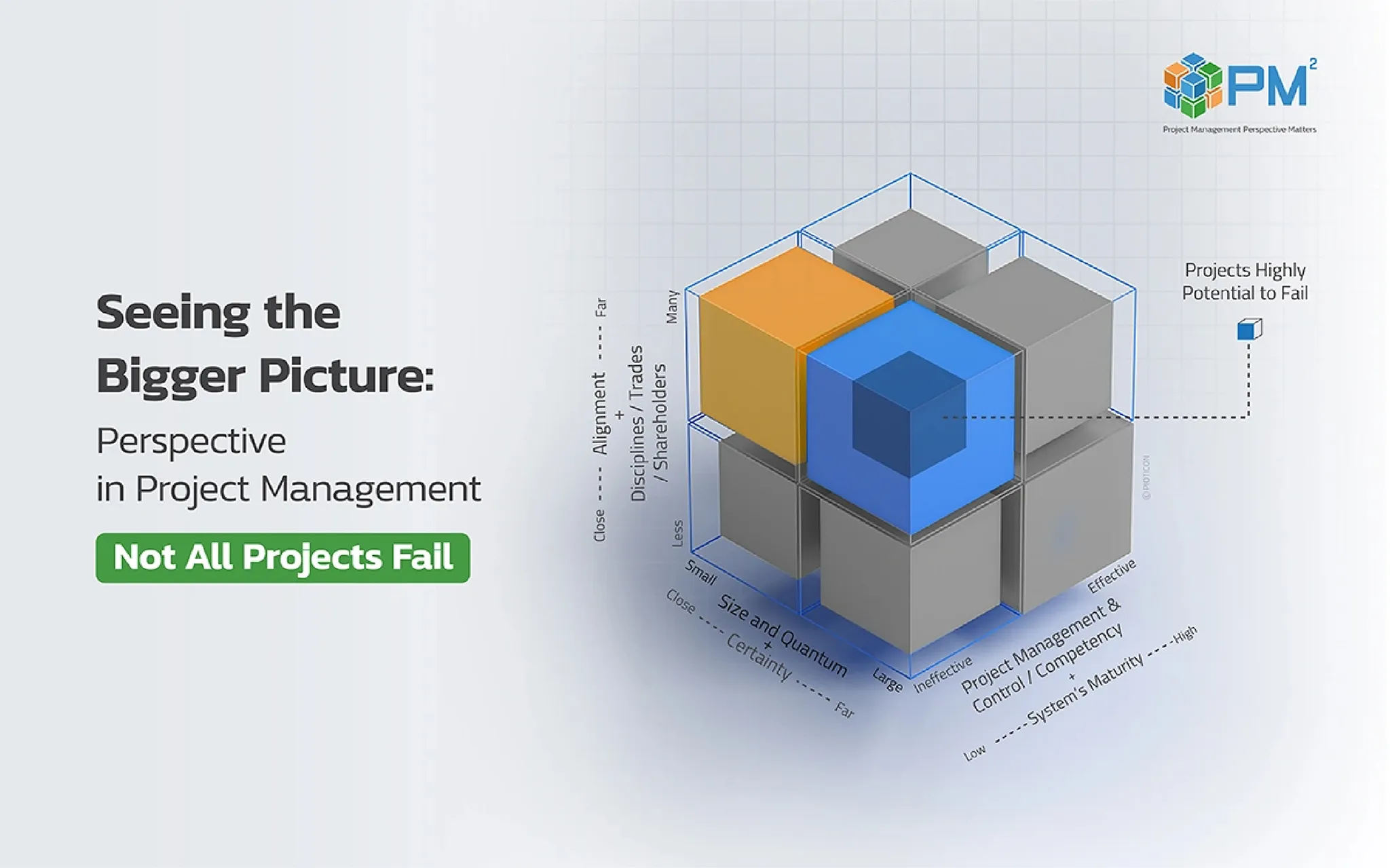
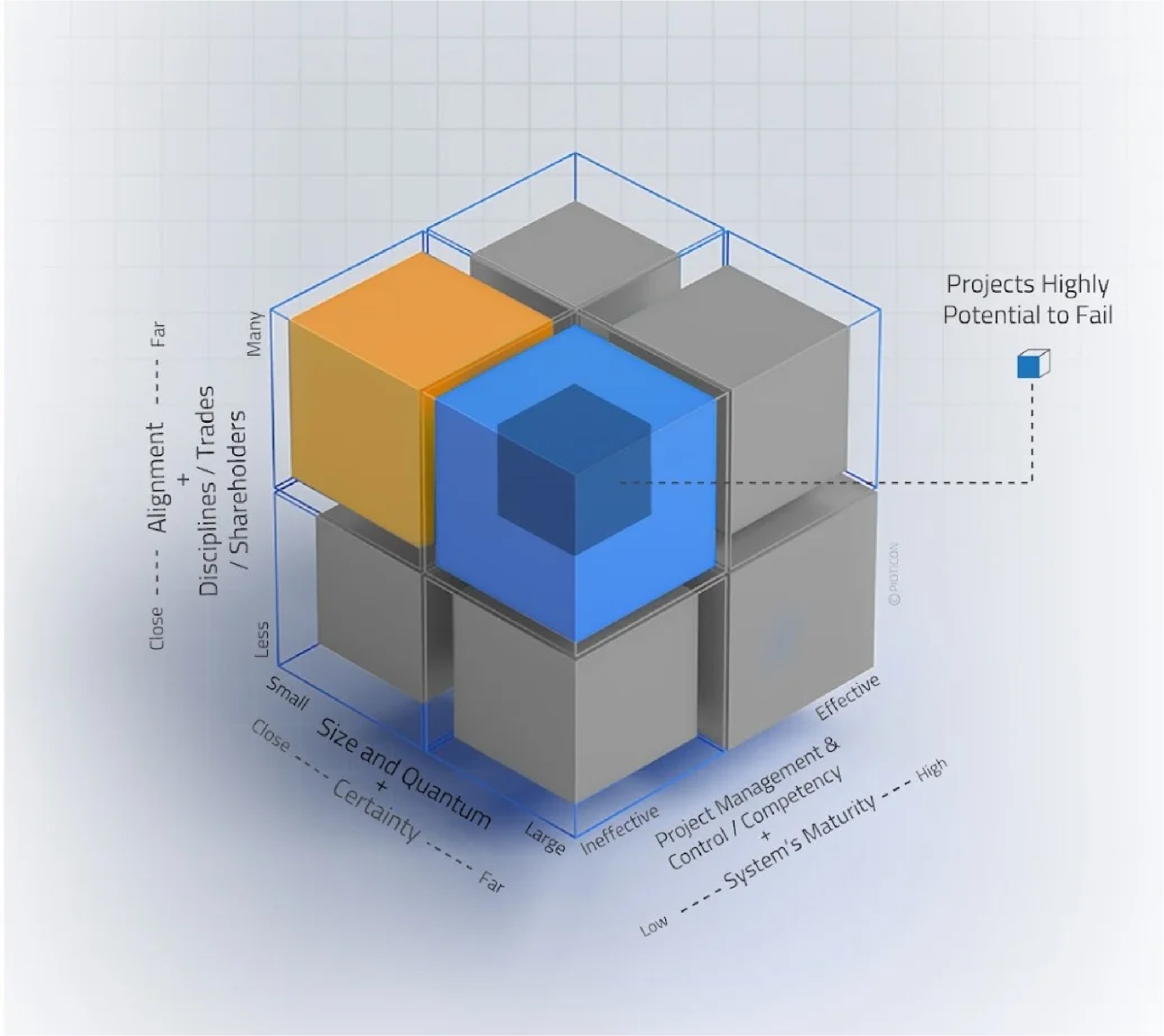
    Based on Pioticon’s experience across sectors, we’ve found that three dimensions define how complex a project really is:

    1. Certainty of Size & Scope
      When project quantum is unclear or changes frequently, everything downstream becomes harder to plan, measure, or control.
    2. Alignment Across Stakeholders
      The more trades, agencies, and layers involved, the more chances for misalignment. Differing goals create friction that cascades across delivery.
    3. Maturity of PMC Systems & Competency
      Even if scope and alignment are strong, an immature project control system will eventually break under pressure. The right systems, dashboards, and controls must be in place—and used daily.

    When one of these dimensions weakens, the other two are forced to overcompensate.
    When all three fail together, even the most promising project will stall.

    What We See: A Cycle of Breakdown

    Mega project issues aren’t random—they’re part of a repeatable cycle:

    • Vague project scopes create uncertainty
    • Misaligned teams make reactive decisions
    • Ineffective systems delay performance tracking
    • Issues escalate while everyone is looking elsewhere

    The result? Delays. Disputes. Cost blowouts. Lost stakeholder trust.

    The Hidden Drivers of Mega Project Failure

    At Pioticon, we’ve identified eight recurring drivers behind time and cost blowouts. The broad theme of those drivers are:

    • Poor integration across delivery functions
    • Weak performance management frameworks
    • Low visibility on early warning indicators
    • Incomplete or outdated system adoption
    • Skill gaps in key leadership roles

    We’ll unpack each of these in future PM² blogs. For now, know this: these factors aren’t isolated, they compound each other.

    The Way Forward

    It’s not more meetings, and it’s not just another software application, or a few PM experts to write generic processes and procedures, or waiting for artificial intelligence to fix cultural problems.
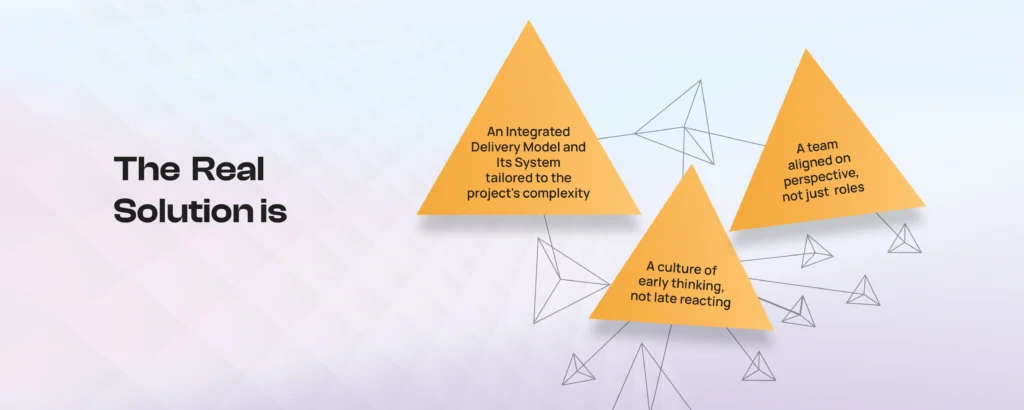
    The real solution is:

    • An Integrated Delivery Model and Its System tailored to the project’s complexity
    • A team aligned on perspective, not just roles
    • A culture of early thinking, not late reacting

    Performance systems don’t work unless teams use them, and project controls don’t matter unless leaders value them.

    Project Failure Is a Systems Issue, Not a Scale or Contractual Issue

    Complexity is not a problem. It’s a reality. But treating complexity with static frameworks is what causes failure. At Pioticon, we don’t just bring tools. We build integrated systems that support proactive leadership and cross-functional alignment designed specifically for the reality of mega infrastructure delivery.

    That’s the core of our PM² (Project Management Perspective Matters) Series.
  • Perspective vs Opinion

    Perspective vs Opinion

    Not all project failures begin with poor planning or flawed execution. Some start with something far more subtle—yet just as powerful: mistaking opinions for perspective.

    In high-stakes infrastructure and construction projects, misalignment rarely looks dramatic at first. It begins quietly—in a meeting where someone says,

    “I need to see it to believe it.”

    It sounds rational. It sounds cautious. But it reflects a deeper issue: the belief that if something isn’t visible now, it isn’t real.

    That’s where projects begin to drift—not because of a lack of expertise, but because of a lack of shared perspective. And in our experience at Pioticon, that gap between what we think we know and what we’ve truly understood is often the difference between a successful outcome and a costly setback.

    The Flat Earth Fallacy in Project Leadership

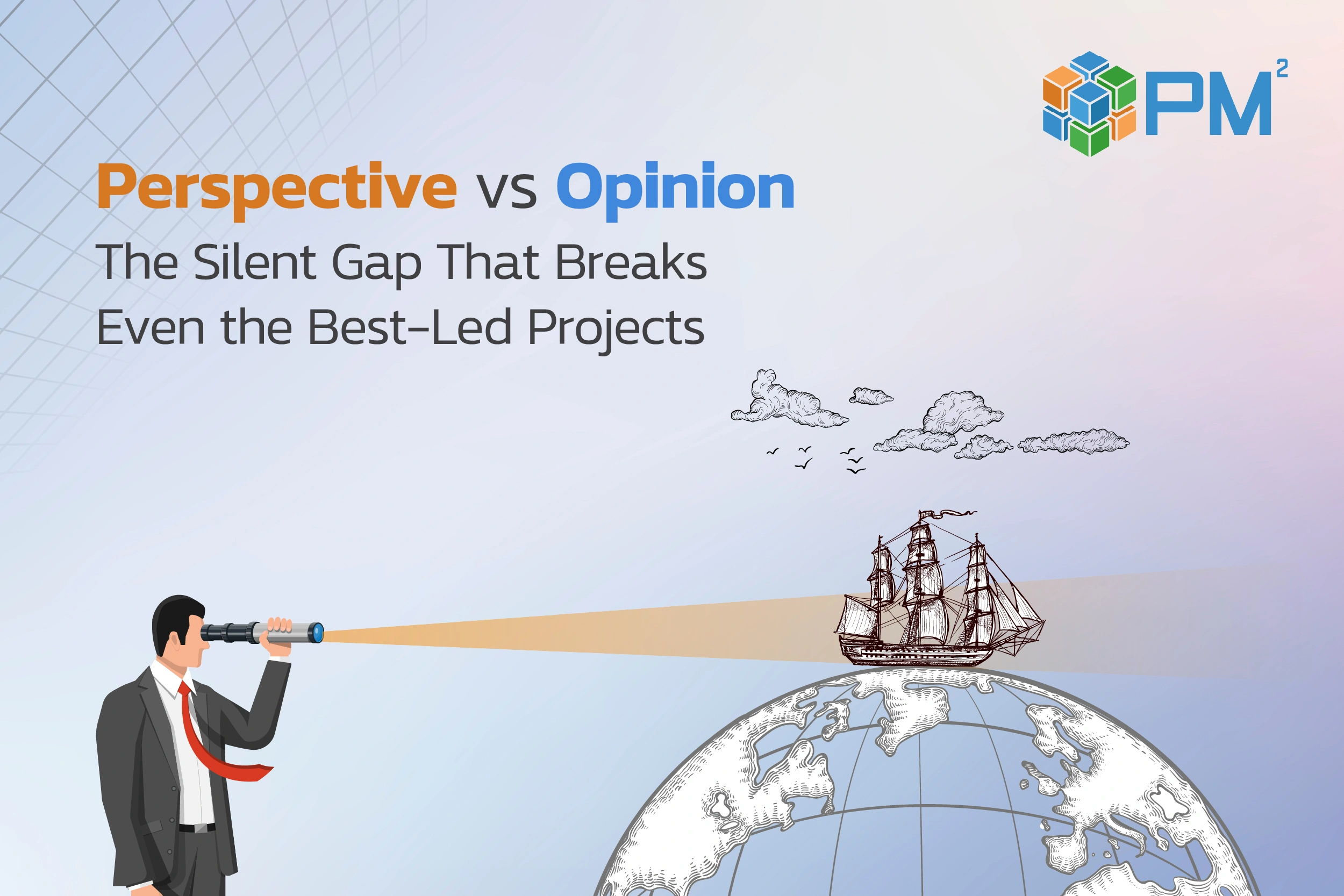
    This mindset, “I need to see it to believe it,” feels like due diligence. But in practice, it’s often a reflection of what we call the Flat Earth Fallacy.

    Centuries ago, many believed the Earth ended at the horizon simply because they couldn’t see beyond it. Similarly, in project delivery, early signals, risk indicators, or emerging trends may be ignored simply because they aren’t immediately visible.

    The result?

    Leaders operate from the assumption that what hasn’t yet surfaced doesn’t exist. But in complex, phased project environments, absence of evidence is not evidence of absence. Dismissing what you can’t see can be a costly mistake.

    The Real Difference Between Perspective and Opinion

    In project environments, it’s common to hear strong statements in meetings like:

    • “There’s no issue yet. We’ll act if something happens.”
    • “Project management is just coordination—it’s not a technical function.”
    • “He seems confident and communicates well; he must be ready to lead.”
    • “She’s too junior for this role.”

    These sound like reasonable points. But are they based on experience, or assumption?

    Let’s define the difference:

    • Opinion is a stance we hold—often shaped by emotion, urgency, or incomplete information. It’s reactive.
    • Perspective is deeper. It’s shaped by experience, exposure, and real understanding. It reflects how we interpret a situation based on what we’ve actually done and lived through.

    Why Perspective Matters More Than Ever in Mega Projects

    At Pioticon, we’ve worked across cultures, regions, and complex infrastructure programs. One insight stands out: teams rarely fall short because of technical skill alone.

    They fall short because team members are acting on unexamined opinions, not aligned perspectives.

    This leads to:

    • Missed early risk signals
    • Delayed decisions based on assumptions
    • Misalignment between strategy and execution
    • Ineffective stakeholder collaboration

    And often, it happens without anyone noticing—until it’s too late.

    Building Aligned Perspective Across Project Teams

    In our PM² (Project Management Perspective Matters) series, we focus not just on leadership, but on perspective alignment across every level of a project.

    Because perspective isn’t just a leadership issue—it’s a team issue.

    Building aligned perspective requires:

    • Continuous Learning – Staying current through practical exposure, not just certifications
    • On-the-Ground Experience – Doing the work, not just directing it
    • Willingness to Recalibrate – Updating assumptions as real-time insights emerge

    The strongest leaders ask themselves:

    “Is this something I know through experience or something I believe strongly?”

    “Am I helping my team think more clearly—or just adding another opinion to the room?”

    Great Leaders Teach People How to Think, Not Just What to Do

    The most valuable project contributors aren’t always the loudest or the most senior. They’re the ones who:

    • See the bigger picture
    • Interpret data through lived context
    • Push discussions from urgency to clarity
    • Align the team around what’s real, not just what’s assumed

    And that starts with perspective.

    Perspective is Foundational in Project Management

    Project success doesn’t come from louder opinions. It comes from shared understanding—from team members who know how to think critically, ask better questions, and recognize when they’re speaking from belief versus experience.

    In mega projects, where timelines are tight and stakes are high, that distinction makes all the difference.

  • Seeing the Bigger Picture: How Perspective Shapes Project Success

    Seeing the Bigger Picture: How Perspective Shapes Project Success

    When infrastructure projects make headlines, it’s often for the wrong reasons—budget overruns, missed deadlines, and large-scale inefficiencies. The narrative seems straightforward: yet another failed project, another financial disaster.

    But is it really that simple?

    Before labeling a project as a failure, we need to step back and ask deeper questions:

    • What does the term project actually mean to different stakeholders?
    • Who defines success, and on what basis?
    • Why do certain projects face more obstacles than others?

    The answers lie in perspective, how different players within a project ecosystem define objectives, risks, and responsibilities. When these perspectives don’t align, the consequences ripple through the entire lifecycle of a project.

    One Project, Many Perspectives

    Let’s take a simple example of a 20km motorway project. While it might appear to be a well-defined endeavor, its meaning varies drastically depending on who you ask:

    • For the client, it’s just one piece of a larger 100km transportation program, where realistic expectations and clear scope drive its success.
    • For the principal contractor, it’s a contractual commitment that must be meticulously managed to avoid scope creep and unforeseen liabilities.
    • For the designer, success means finding a solution in the most economical way, efficiency, and compliance in both temporary and permanent design works.
    • For the subcontractor, the goal is to execute their specialized task as cost-effectively and efficiently as possible.
    • For politicians and governments, it is driven by public perception, funding, and election cycles, the project’s success is tied to policy objectives, economic impact, and public reception.

    Each of these players is operating within the same project, yet their definitions of success—and their risks—are vastly different.

    When Perspectives Clash, Projects Suffer

    The problem arises when these perspectives remain unaligned. Risks are unevenly distributed, decision-making slows down, and the entire project becomes vulnerable to:

    • Scope creep – Unreasonable or vague contractual obligations and Miscommunication between stakeholders leads to unclear or changing expectations.
    • Budget explosions – Cost assumptions made by one party may not reflect on-the-ground realities faced by another.
    • Timelines stretching indefinitely – Conflicting priorities delay decision-making and execution.

    Project success is not just about hitting schedules and staying within budgets—it’s about creating a shared understanding among all stakeholders from the start.

    Reframing Success in Project Management
    Instead of defining success in narrow terms like cost and time, we need a broader, more perspective-driven approach to project management:

    • Stakeholder Alignment: Before execution even begins, ensure every key player understands the project’s objectives and constraints from each other’s point of view. Align on key performance metrics to define success to both stakeholder and project
    • Risk Balancing: Clearly define where responsibilities lie so risks don’t accumulate disproportionately on certain teams.
    • Systems Thinking: A project is not just an isolated contract—it’s a dynamic system of people, decisions, and interdependent parts. Managing it effectively requires stepping back and seeing the bigger picture.

    If you are a project owner, contractor, policymaker, engineer, or anyone involved in large-scale projects, this series will provide valuable insights and strategies for improving project alignments for better outcomes.

    So, What’s Your Perspective?

    How do you define project success in your industry? Have you ever faced challenges aligning different stakeholder expectations?

    Stay tuned for more insights in the Project Management Perspective Matters (PM²) Series by Pioticon.

  • Project Management Perspective Matters: Why Aligning Stakeholder Views is Key to Project Success

    Project Management Perspective Matters: Why Aligning Stakeholder Views is Key to Project Success

    Every major engineering and construction project thrives when every stakeholder shares a common understanding of success. But in reality, perspectives differ.

    From sponsors, clients, principal contractors, and designers to subcontractors, suppliers, and community leaders, each stakeholder brings their own priorities, biases, and expectations to the table. These differences, if left unaddressed, create misalignment, setting the stage for delays, cost overruns, and even project failure.

    At the same time, project beneficiaries- local communities, organizations, end users, and political leaders, often have an entirely different outlook. Their focus is on the final impact, not the countless challenges faced during execution. This contrast can create friction, misunderstandings, and resistance.

    It’s important to note that delays and cost overruns are measured against the baseline plan. However, this baseline may sometimes be unrealistic from the start, while in other instances, inefficient project delivery is indeed the root cause.

    The Cost of Misalignment in Projects

    Misalignment isn’t just an operational hurdle—it’s a critical risk factor. When stakeholders lack a shared vision:

    • Teams struggle with conflicting priorities, leading to inefficiency.
    • Decision-making slows down, increasing costs.
    • Unrealistic expectations create tension and dissatisfaction.
    • Project execution deviates from the intended goals.

    Bridging these gaps requires more than just process optimization; it demands a shift in perspective.

    The Power of Perspective in Project Success
    In the Project Management Perspective Matters (PM²) Series, we’ll explore how these varying viewpoints shape project outcomes and, more importantly, how leaders can bring them into alignment.

    We’ll cover:

    • Why perspective is the missing piece in project success – Understanding how different stakeholders define success and why their perspectives must be accounted for.
    • How misalignment happens before execution even begins – Identifying the early warning signs of divergence and how to address them at the planning stage.
    • What practical steps can help teams work toward the same goal – Actionable strategies to create a shared vision, align expectations, and drive collaboration.

    Beyond Timelines and Budgets: Playing the Same Game

    A successful project isn’t just one that’s completed on time and within budget. True success means every stakeholder sees value in the outcome—because, ultimately, a project’s impact lasts far beyond its execution.

    It starts with understanding perspectives. It succeeds when everyone is playing the same game.

    What’s one perspective shift that completely changed the way you approach project management? Share your thoughts in the comments!

    Stay tuned for the upcoming posts in the Project Management Perspective Matters series, where we’ll dive deeper into these crucial insights.